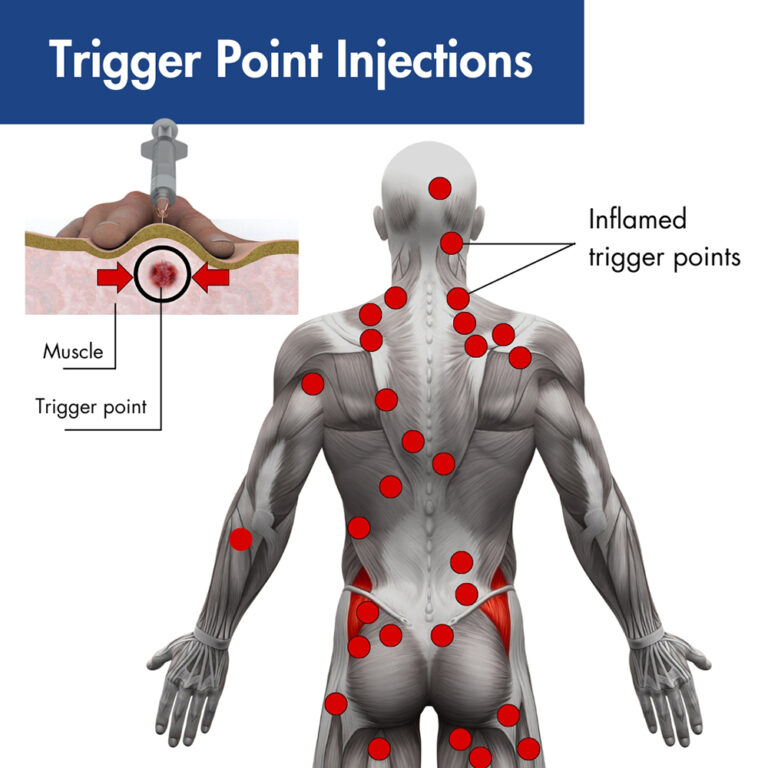
Trigger Point Injections: How Can They Help With Fibromyalgia
What Are Trigger Points?
Trigger points are involuntary tight tender spots in a contracted muscle. This creates pain and dysfunction within the muscle. They are in parts of the muscle where there is decreased circulation, increased muscle contraction, spasm and increased nerve sensitivity causing a sharp pain or a constant ache. They also can cause referred pain, or pain felt in other parts of the body.
What Causes Trigger Points
Trigger points develop from either stress, repetitive or overuse of a muscle. When a muscle is overused or injured a contraction develops and knots occur. These annoying knots develop when individual muscle fibers are over-stimulated and unable to release their contracted state. This contraction reduces blood flow resulting in a diminished supply of oxygen and a build up of metabolic waste. The trigger point then reacts by sending out signals of pain.
What are Trigger Point Injections?
A trigger point injection can help soothe muscle pain, especially in your arms, legs, lower back and neck. It also can be used to treat fibromyalgia, tension headaches and myofascial pain.
Trigger point therapy commonly involves injecting small amounts of anesthetic (lidocaine) and steroid into the trigger point can help alleviate the pain.
Can Trigger Point Injections Help With Fibromyalgia?
Trigger point injections are a safe and effective way to release trigger point knots, loosen the overlying fascia, and restore unrestricted movement to the affected muscle.
The quick treatment starts with a thorough exam to determine the location and severity of your trigger points. After finding a specific trigger point, an APEX doctor cleanses the injection site, gently pulls your skin taut, and injects an anesthetic mixture directly into the trigger point, causing it to relax immediately.
While most trigger points loosen and subside after just one injection, The doctor may have to administer one or two additional injections from slightly different angles to take care of large or overly persistent trigger points.
Most people experience instant pain relief following trigger point injection therapy. To keep your muscles relaxed and pain free as the weeks and months go on, it’s important to stay active and perform any prescribed stretches or exercises as recommended.
How Fibromyalgia Occurs and Affects
Fibromyalgia may evolve from physical trauma, surgery, infection, or severe psychological stress. Occasionally, symptoms arise slowly and work their way up to a climax without the presence of any specific cause. It is a disease resulting from chronic pain management, whereby the nervous system becomes sensitive to pain stimuli.
The condition impacts people’s physical and psychological well-being. Pain and fatigue are the two primary symptoms; other symptoms include difficulty sleeping, temper swings, and poor concentration. Fibromyalgia is misdiagnosed because the signs are not noticeable; the muscles do not show any signs of inflammation or injury.
Treating fibromyalgia involves several different disciplines and approaches. Fibromyalgia treatment entails the use of drugs, medication, therapy, and lifestyle changes to try to contain the symptoms.
Acupuncture, yoga, and meditation are some of the beneficial complementary therapies for fibromyalgia. A fibromyalgia patient must regularly do low-impact aerobics or stretching exercises. Fibromyalgia relief treatment has emerged as one approach to stress-free treatment, to improving sleep and muscle function.
Fibromyalgia Symptoms:
Fibromyalgia affects the musculoskeletal system along with connective tissue and often results in muscle stiffness, especially in the neck, shoulders, and back. Some of the other common symptoms of fibromyalgia are:
Chronic and widespread pain
Pain that may feel like a burning pain or a deep ache
Heightened pain response to applied pressure
Postural Orthostatic Tachycardia Syndrome (POTS)
Tender points, especially at the back of the neck and the shoulders
Body aches and stiffness that get worse at night and improve over the course of the day
Fatigue and sleep problems
Numbness and/or tingling in the hands and feet
Irritable bowel syndrome
Temporomandibular disorders (TMD), also known as TMJ disorders
Key Characteristics of Trigger Points:
- Palpable nodules: Feel like hard knots or rope-like bands under the skin
- Referred pain: Cause pain in other areas of the body (e.g., neck trigger points causing headaches)
- Local tenderness: Extremely sensitive to pressure
- Restricted movement: Limit range of motion in affected muscles
- Muscle weakness: Can cause fatigue and decreased strength
-
Active vs. Latent Trigger Points
Active trigger points cause spontaneous pain and are tender to touch. Latent trigger points only hurt when pressed but can restrict movement and cause muscle weakness. Both types respond well to injection therapy.
-
Conditions Successfully Treated with Trigger Point Injections
Trigger point injections are FDA-approved and clinically proven for treating various pain conditions:
Myofascial Pain Syndrome
The primary indication for TPI, affecting the connective tissue covering muscles. Success rate: 70-80% improvement in pain scores.
Fibromyalgia
Reduces localized pain at tender points, complementing systemic treatment. Many patients report 50-60% pain reduction.
Tension Headaches
Treating neck and shoulder trigger points can reduce headache frequency by up to 70% in responsive patients.
Lower Back Pain
Especially effective for muscular causes of chronic low back pain, with 65% of patients experiencing significant relief.
Other Conditions That Benefit from TPI:
- Neck pain and cervical strain
- Shoulder pain (rotator cuff syndrome)
- Tennis elbow (lateral epicondylitis)
- Temporomandibular joint (TMJ) dysfunction
- Post-surgical muscle pain
- Chronic regional pain syndrome
-
What Happens During a Trigger Point Injection?
Pre-Procedure Preparation
- No fasting required
- Wear comfortable, loose clothing
- Continue regular medications unless instructed otherwise
- Inform your doctor about blood thinners or allergies
-
The Injection Process: Step by Step
- Positioning: You’ll be positioned comfortably to expose the treatment area
- Identification: Your physician palpates to locate exact trigger points
- Cleaning: The injection site is sterilized with antiseptic
- Injection: A thin needle (25-27 gauge) is inserted into the trigger point
- Medication delivery: The solution is slowly injected while the needle is moved slightly to break up the knot
- Completion: The needle is removed and pressure is applied
Duration: The entire procedure typically takes 10-15 minutes for multiple trigger points.
-
Injection Options
Type of Injection Medication Used Best For Duration of Relief Local Anesthetic Lidocaine or Bupivacaine Immediate pain relief 4-12 weeks Corticosteroid Triamcinolone or Methylprednisolone Inflammation reduction 2-3 months Saline Normal saline solution Mechanical disruption 4-8 weeks Dry Needling No medication Muscle release 2-6 weeks Botox (off-label) Botulinum toxin Severe spasticity