I lift heavy weights to soothe my fibromyalgia pain—here’s what the science says
I THINK THE BARBELL SAVED ME. Before that, I was toiling under the bar as a sports-bra-clad 20-something, lifting heavy things off the floor in pursuit of vain aesthetic goals. Then one day, that version of my life evaporated over a small bowl of rolled oats.
That pivotal morning, I felt something novel: earth-shattering pain like I’d never felt before. It crept up and down my back, hammering my vertebrae as if they were piano keys. Over the next few weeks, this percussive melody swelled to a full-body symphony. Agony spread to my limbs and tightened, viselike, around my ribs until I suspected I was having a heart attack. My sleep shattered into tiny, torturous fragments. I was suddenly sensitive to bright lights and loud noises, wading through waves of nausea, and sinking headlong into brain fog.For a few months, securing a diagnosis became my sole mission.
I ignored work to Google symptoms and spent my savings on medical appointments. I ran the gamut: cardiologist to pain specialist, general practitioner to gynecologist—a new diagnostician for each mysterious symptom. No one offered me an answer.With the battery of tests exhausted, a kind doctor in a Kolkata clinic finally diagnosed me with a condition traditionally defined by exclusion: fibromyalgia syndrome (FMS). But there was no pill to take, no detailed road map to follow for the rest of my lifelong journey.
I had no idea that I would come to view my longtime acquaintance—that 45-pound stainless-steel bar and its set of stackable plates—in a completely different light, and that it would help me chart my path.
What makes FMS so hard to diagnose?
Most people with fibromyalgia have had somewhat similar diagnostic experiences. The helpless trudging from specialist to specialist. The constant, confusing pain. The sense of isolation. No one ladled the biryani for me, stirring the individual symptoms into a cohesive diagnosis like cardamom pods, fried onions, and chunks of mutton coalescing atop layers of rice. To be fair, it’s not exactly their fault. The US National Institute of Arthritis and Musculoskeletal and Skin Diseases describes FMS as a chronic disorder that causes pain and tenderness throughout the body, fatigue, sleep problems, and heightened sensitivity to pain. But what’s really important to absorb is the institute’s caveat that “scientists do not fully understand what causes it.”
underdiagnosed in men is an active area of research). This is sobering, considering that medicine has historically ignored women’s pain—making them wait longer in emergency rooms, dubbing them “emotional,” and nudging them to just ignore the “little pain, honey.” , I found myself going through the rigmarole of not inconveniencing others, not sounding “too hysterical”—because if it doesn’t show up on medical imaging or in a blood panel, it isn’t real.
With FMS, the diagnosis is hard won, but what follows is harder. You may navigate, alone, the cesspool of a vague and nebulous condition with little medical support, using generalized prescriptions from practitioners. You may get shunted from osteology to neuroscience, rheumatology to pain management. You might find your way to the fibromyalgia subreddit, where fellow chronic pain sufferers can validate your story. What helped me most was forming some semblance of a community. I began to figure out how to move forward.
The relationship between FMS and resistance training
Few blows were harder and more bewildering than being advised by the many specialists I saw to give up weight training. My life was going to be hard with fibromyalgia, they reckoned—wouldn’t I rather try light tai chi or restorative yoga instead? Already frustrated (“chronic pain” meant I’d never be cured, and that was crushing), I found this a bitter pill to swallow. I’d been lifting weights since I was 18, and all those deadlifts, bench presses, and heavy barbell squats had given me a dopamine release that few other things had. Not even India’s inequitable COVID-19 pandemic could keep me away—I had settled into a makeshift home gym, pertinaciously jotting down the day’s reps and sets in a mass of squiggles on my phone. These numbers spoke to me in their own love language, soothing my anxiety. Often, they were the fulcrum that balanced an entire day.
Again, I cannot entirely blame my doctors. Their recommendation stemmed from a lack of new research. Guilherme Torres Vilarino, who has a doctorate in human movement science and works as an assistant professor at Santa Catarina State University in Brazil, explains that studies on resistance training and FMS are still too recent and limited for medical practitioners to incorporate them into treatment plans. One of the earliest studies that investigated the effects of resistance training in patients with FMS—wherein a group of premenopausal women with FMS took part in 21 weeks of progressive strength training, but resistance training’s effects on people with FMS remained a rare research topic until a few years ago. “Scientific information does not reach the professionals who are working on a daily basis so quickly, so there’s a certain outdatedness,” Vilarino says. “Many professionals still think that exercise with loads will make pain worse.”
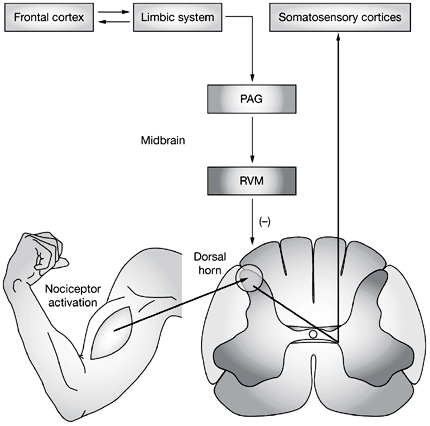
The Lancet takes this further to suggest that people with fibromyalgia experience “nociplastic pain,” a relatively newly defined type of pain that’s different from nociceptive pain (caused by inflammation or tissue damage) and neuropathic pain (caused by nerve damage). The Lancet acknowledges that there’s more to learn about nociplastic pain, but that one factor could be altered pain modulation—the process by which the body handles pain signals. The medical journal also says that this kind of pain can be “more widespread or intense, or both, than would be expected given the amount of identifiable tissue or nerve damage.”
It makes sense, then, that many with FMS instinctively recoil from anything that feels out of place and could trigger symptoms. Perhaps resistance training is a fan to the flame for many diagnosed with fibromyalgia. But research now suggests that for some fibromyalgia patients, at least, weights are worth a closer look.
Why resistance training may be able to help with fibromyalgia
Since FMS research really began taking off in the past couple of decades, studies have sought to find out what the syndrome actually does to you and how exercise factors in. A 2006 study in Physical Therapy, for example, compared the functional physical performance and strength of women with fibromyalgia, women of similar weights and ages without FMS, and healthy older women. The results were alarming: The young women with FMS and the healthy older women had similar lower-body strength and functionality, which suggests fibromyalgia could increase the risk of premature age-related disability.
It’s been four years since my diagnosis, and since then, I’ve moved through tidal waves of emotion—first mourning for a body that once was, then feeling rage, grief, and quietude all at once. The struggle, as the kids say, is real: A bad pain flare will push me, frustrated, away from the squat rack for a day or two, and a bout of nausea can physically stop me from lifting a weight for half a week. In all of this, at least, I’ve earned a more heightened awareness of my body—a silver lining that gives me comfort when I’m low. Science will agree that movement looks different on different days, and research can’t yet confirm exactly what movement means for those of us with FMS. But I’ve come to understand that sometimes standing still, inert, hyperaware in the tsunami that is chronic pain, is movement itself.