Familial Mediterranean Fever Linked to Autoimmune and Rheumatologic Inflammatory Diseases
Familial Mediterranean fever (FMF) is caused by pathogenic variants in MEFV, which encodes pyrin. As pyrin regulates inflammasome activation, and interleukin-1ß (IL-1ß) and IL-18 maturation, abnormalities in the pyrin can lead to recurrent fevers and serositis, in addition to continued low-grade inflammation. The treatment for FMF is colchicine, which usually prevents acute flares and amyloidosis. However, chronic inflammation is thought to persist and has been linked to certain immune-mediated comorbidities.
To investigate the association of FMF with rheumatologic and autoimmune comorbidities further, a team of researchers from Ben-Gurion University in Israel, and colleagues from other institutions in Israel, conducted a nationwide, retrospective, population-based matched cohort study. They used electronic medical records from Leumit Health Services (LHS) (2001 to 2024), matching patients with FMF (n=3,324) with controls without FMF (n=13,296) by sex and age. The rheumatologic and other autoimmune diseases studied included inflammatory bowel disease, autoimmune thyroid disease, ankylosing spondylitis, Behçet disease, rheumatoid arthritis, psoriatic arthritis, connective tissue disease, systemic lupus erythematosus (SLE), systemic vasculitis, systemic sclerosis, dermatomyositis, polymyalgia rheumatica, Sjögren syndrome, relapsing polychondritis, osteoarthritis, fibromyalgia, psoriasis, and gout. Some of these had been found to have increased frequencies in patients with FMF in past observational studies and registry-based analyses.
The patients with FMF met the following criteria:
- ≥ 2 diagnoses of FMF documented by a rheumatologist (using International Classification of Diseases, 9th Revision)
- Continuous enrollment at LHS for ≥ 12 months prior to the index date
- ≥ 2 dispensed prescriptions for colchicine
The endpoints were baseline prevalence of comorbidities and cumulative occurrence of new comorbidities diagnosed at any time during the 20 years of the study.
The characteristics of the individuals with FMF compared to the controls at baseline were:
- Ethnicity
- More frequently of Arab ethnicity (30.2% vs 21.0%, P<.001)
- Less frequently Jewish ultra-Orthodox (9.8% vs 19.8%, P<.001)
- Mean body mass index (BMI) and weight
- Lower BMI (22.9 vs 23.4, P<.001)
- Higher proportion of underweight (27.5% vs 24.8%, P=.002)
- Higher proportion of non-smokers (61.7% vs 58.6%, P=.001)
Baseline comorbidities
At baseline, the patients with FMF had a significantly higher prevalence of some rheumatologic comorbidities (Behçet disease, rheumatoid arthritis, fibromyalgia, gout, connective tissue disease, and osteoarthritis) compared to the control individuals, including after multivariable adjustment and false discovery rate (FDR) correction (all P<.001). Ankylosing spondylitis also occurred more in patients with FMF (P=.011), but after FDR correction, this was attenuated.
Selective autoimmune vulnerability emerges over time
The long-term rheumatologic outcomes showed that patients with FMF had a higher occurrence of some of the rheumatologic and autoimmune inflammatory conditions compared to the controls. The largest associations were for Behçet disease, ankylosing spondylitis, rheumatoid arthritis, fibromyalgia, gout, connective tissue disease, and SLE (all P<.001). After multivariable adjustment and FDR correction, these remained. Additionally, systemic vasculitis and psoriatic arthritis were significantly more frequent for the FMF patients after these adjustments (P=.003 and P=.006, respectively). Other autoimmune diseases that were significantly more prevalent were Crohn’s disease (P<.001) and multiple sclerosis (P=.001).
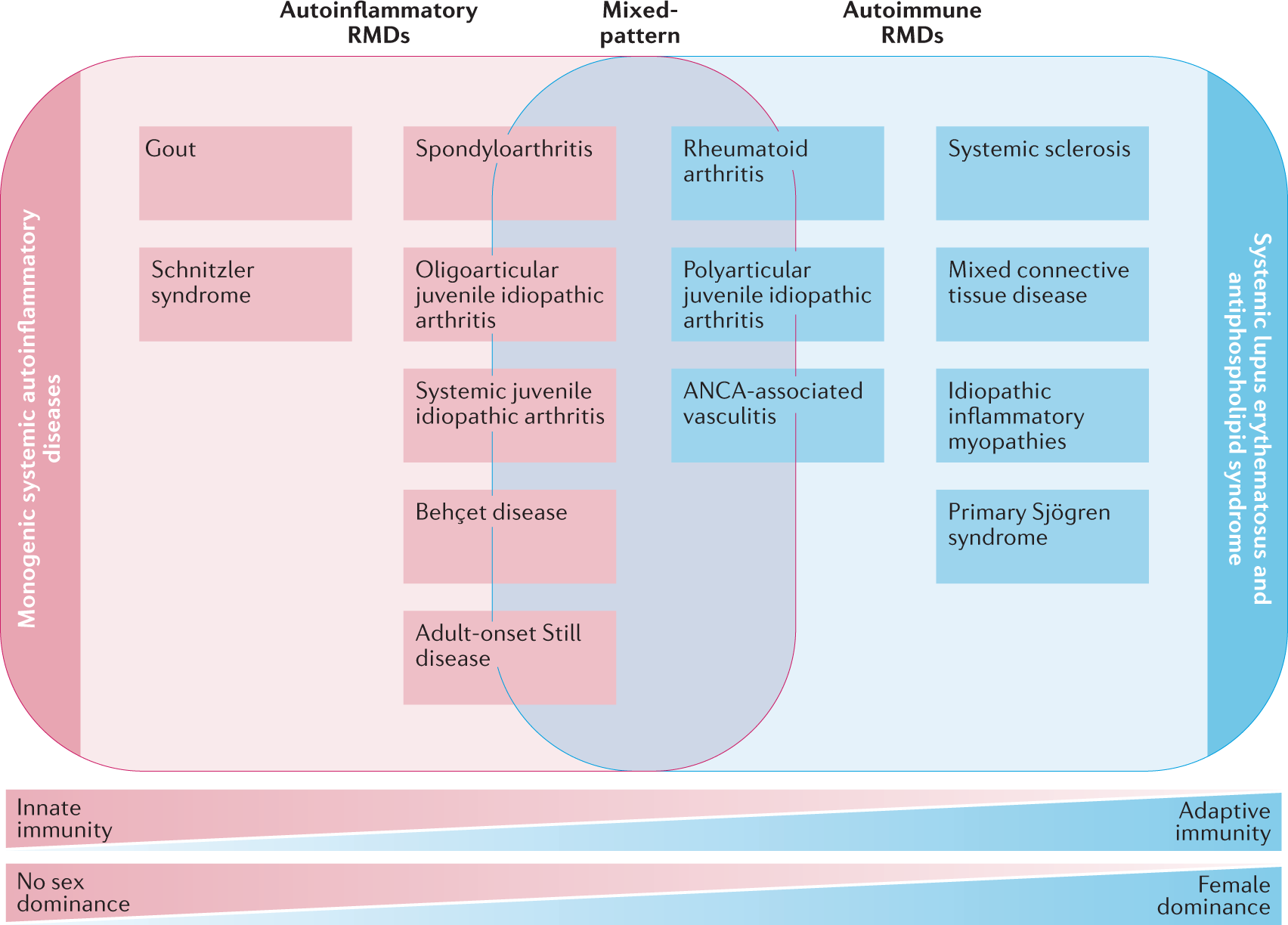
The composite outcome of any of the previously mentioned rheumatologic or autoimmune diagnoses, other than fibromyalgia and osteoarthritis (which are not classified as autoimmune), was significantly more frequent in patients with FMF (17.0%) compared to the controls (7.4%) during the follow-up period (P<.001). When those two diseases were added in, there was still a significant difference (28% vs 15%, P<.001). Overall, this is an approximately twofold difference in frequency during the follow-up period. Additionally, this suggested an early and later susceptibility of FMF to selective rheumatologic diseases across the course of life, rather than a uniform increase in the occurrence of autoimmune diseases.
Amyloidosis highlights ongoing inflammatory risk
Amyloidosis was used both as an FMF-specific outcome and a marker of cumulative inflammatory burden. It was found to be significantly more frequent in FMF patients vs the controls at baseline (0.27% vs 0.008%) and at follow-up (1.26% vs 0.015%), both P<.001.
Why colchicine does not always lead to a clinical-free condition
The authors also addressed a concern that was raised during peer review of their article: Most of the patients with FMF were on colchicine and so were expected to be mostly free of clinical attacks, so why did they show an excess of long-term autoimmune comorbidity? Their explanations were:
- Colchicine does not fully normalize subclinical inflammation-persistent elevations in acute-phase reactants (IL-1, IL-18, IL-6, and serum amyloid A).
- Inflammasome-driven processes that lead to adaptive autoimmunity are likely to occur over years to decades; therefore, any developmental window during which the patient was untreated, undertreated, or non-adherent (even the time before formal diagnosis) may be enough to add to long-term susceptibility.
- Colchicine acts on microtubule polymerization and downstream activation of the pyrin axis; it does not directly modify trained immunity, NET formation, T-helper cell polarization, or epigenetic reprogramming of myeloid progenitors. All of those are thought to cause the autoimmune phenotypes seen in the study.
- The study cohort included a fraction of colchicine-resistant or colchicine-intolerant patients in whom subclinical inflammation is not completely controlled; these patients are the ones who are most likely to develop both amyloidosis and the spectrum of comorbidities reported on.
“Together, these considerations suggest that adequate clinical control of FMF attacks on colchicine is not synonymous with full immunological quiescence, and that long-term autoimmune comorbidity may accrue despite—and partly independently of—colchicine therapy,” the authors noted.
Study limitations
The limitations of the study reported by the authors were as follows:
- Administrative codes were used for diagnoses.
- Genotypic data, inflammasome activity, and cytokine profiles were not available.
- Residual confounding and healthcare utilization differences may have occurred.
- Disease severity, age of onset, attack frequency, and details about colchicine were not available.
- Other autoimmune diseases were not adjusted for.
Summary
“In conclusion, in this nationwide cohort with long-term follow-up, FMF was associated with a selective and persistent increase in the cumulative occurrence of multiple rheumatologic and autoimmune inflammatory diseases,” the authors wrote. “The persistence of these associations despite colchicine exposure, together with their selectivity for diseases with prominent innate immune or seronegative components, supports recognition of FMF as a systemic inflammatory condition with broader long-term clinical implications for rheumatologic surveillance.”
Published: