Fibromyalgia sufferer who could ‘barely breathe’ and was left in agony by walking claims a £9.95 drug-free cream has relieved her symptoms while she can’t access morphine during lock down
- Louise Woodfine, 31, from Kent, was diagnosed with fybromyalgia
- Said pain was so bad she could barely breathe and walking caused her ‘agony’
- Found solution in form of cream which is helping during lock down
-
A fibromyalgia sufferer in isolation without access to morphine has claimed she has found a £9.95 painkiller which has helped to reduce her symptoms in just four days.
Louise Woodfine, 31, who lives in Maidstone in Kent with a five-year old daughter whom she shares with husband Terry, 32, a building technician, was first diagnosed with the condition on the 14th June by her GP, after many years of invasive tests, examinations, hospital trips, painful days and horrific nights.
-
She continued: ‘My first symptoms started soon after having our daughter. The chronic back pain was the worst symptom, along with heavy fatigue, brain fog, forgetfulness, insomnia and all-over muscle pains. But as it was so soon after giving birth everyone assumed it was due to that.’
The mum-of-one spoke with midwives, GPs and her family about her symptoms, but it was all put down to the horrific birth experience and the fact that she was psychologically trying to erase it from her body’s memory.
- This saddens me because having a child is a special experience that you should want to remember,’ she explained. ‘However, due to the onset of my fibromyalgia as a result of giving birth, I feel that it has left a traumatising impact on me that has affected future decisions to have more children.
-
She added: ‘I feel like I’ve lost many years of my life to pointless tests, examinations and continued pain because fibromyalgia has only recently been confirmed as a true medical condition.’
Speaking of the day she was first diagnosed, Louise explained: ‘I entered my GP’s office expecting to be offered the same sort of advice I had been given many times before about relying on pain killers and making sure that I was getting enough sleep and exercise.
-
Instead, my GP said the word “fibromyalgia,” something I had not heard mentioned before.’
‘I was then given the 18-point tender check; these are the main points on the body where a fibromyalgia sufferer feels pain. I had 13 of these points, some more considerably painful than others. Along with my medical history and the results of all the tests I had previously undergone over four years, I was finally diagnosed.
Louise cried when she was told – not because of the diagnosis itself but because finally had one and because someone had listened to her. Over time, her fibromyalgia has got worse.
‘More points are becoming painful, areas of my body are feeling more pain and I can go from a day where I can walk around a park, do a shift at work, to barely being able to move from my home,’ she explained’ ‘I feel the stiffness setting in before I have managed to lift my legs from my bed, and my symptoms decide how my days are going to be from one to the next.’
Louise’s worst flare-up occurred around May.
‘My body felt like I’d been completely taken over by pain, I could barely breathe, walking was agony and as the day wore on, it became harder and harder to handle,’ she said.
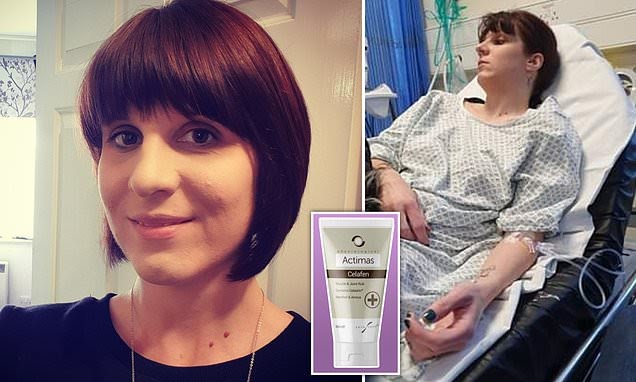
‘It got to the point where I thought I maybe had an infection I was that bad. In the end my husband took me to hospital where they gave me an IV drip for fluids and the strongest pain relief I could have because I couldn’t manage the pain alone.’
WHAT IS FYBROMYALGIA?
Fibromyalgia, also called fibromyalgia syndrome (FMS), is a long-term condition that causes pain all over the body.
The exact cause of fibromyalgia is unknown, but it’s thought to be related to abnormal levels of certain chemicals in the brain and changes in the way the central nervous system (brain, spinal cord and nerves) processes pain messages carried around the body.
As well as widespread pain, people with fibromyalgia may also have:
Increased sensitivity to pain, problems with mental processes (known as ‘fibro-fog’) – such as problems with memory and concentration.
Louise says her illness has taken a huge toll on her mental health, too.
‘Just trying to adjust to the daily pain and regular symptoms of fibromyalgia is a constant struggle and there have been times when I questioned how much I wanted to continue with it all,’ she said.
‘My fibromyalgia has negatively affected my work as I’ve had to take a lot of time off, so I’ve lost jobs and had written warnings from employers.’
‘As a result, I’ve had to take lower paid part-time work that is more bearable, and even then I have to be very careful about mentioning the word “fibromyalgia,” as people are still very dismissive of it.’
Louise went on to say her family, partner and daughter have been very supportive throughout the whole journey.
‘My husband has been particularly patient with my condition and understands when I wince if he touches my skin during a flare up, or when I’m crying in the shower because of the amount of pain I am suffering,’ she said. ‘I am very lucky to have such an understanding partner.’
Since her diagnosis, Louise has tried so many medications, she has lost count.
‘All of them caused me to suffer considerable side-effects, from a complete change of behaviour, to severe diarrhoea and not being able to sleep for more than two hours at a time,’ she said. ‘I am currently on morphine up to four times a day, but to try and reduce my reliance on it, I have also tried many creams – but have found these not to be helpful with my pain.
However, Louise claims it was only when she came across Celafen in August on a discussion blog, that she actually found pain relief in the form of a cream.
‘I was sceptical at first, I have tried so many creams and potions that I was fairly certain it wouldn’t work,’ she explained. ‘I applied the cream first thing in the morning when my body stiffness and pain is at its strongest and before bed so that the pain was manageable throughout the night. I would also use it during the day when my flare-ups occurred.’
Since using the cream regularly for seven months, Louise says she has been able to lower her doses of morphine.
‘Currently my whole family and I are self-isolating due to showing signs of Coronavirus symptoms,’ she said. ‘We are currently on our second week of the 14-day period, and due to the stress, my pain and stiffness is definitely heightened.’
‘I’m worried mostly because of my Costochondritis (which I have also been diagnosed with) and the fact that the virus affects the respiratory system. I will almost certainly need to be hospitalised if I were to catch it, so I’m very scared at the moment.’
Louisa had a scheduled GP appointment next week as her pain medication is running low due to her fibromyalgia flaring up, but this is understandably now a telephone consultation.
‘I’m worried about being able to receive more pain relief and morphine due to the difficulty in the dispensing of prescriptions during the lockdown,’ she explained. ‘However, I have upped my use of Celafen cream while in isolation to try and make the morphine I have left go a little further and this is making a big difference getting through the day.’
‘I am so grateful that even in these difficult times I’ve still got access to something that can help ease my pain alongside my medications. I ordered more in the post this week and it arrived quickly and without any fuss. I feel like it’s one of the essential things helping to get me through all this.